
As the weather warms up, the bugs start waking up, including those pesky ticks. Whether your pet enjoys hiking trails, playing in the backyard, or simply lounging in the grass, both dogs and cats can pick up ticks during their outdoor adventures. While many tick bites are harmless, some ticks can transmit serious diseases that affect both pets and people. Knowing how to identify a tick, remove it safely, and recognize signs of illness can help keep your furry family members healthy. Here is what to do if you find a tick on your pet.
What Does a Tick Look Like?
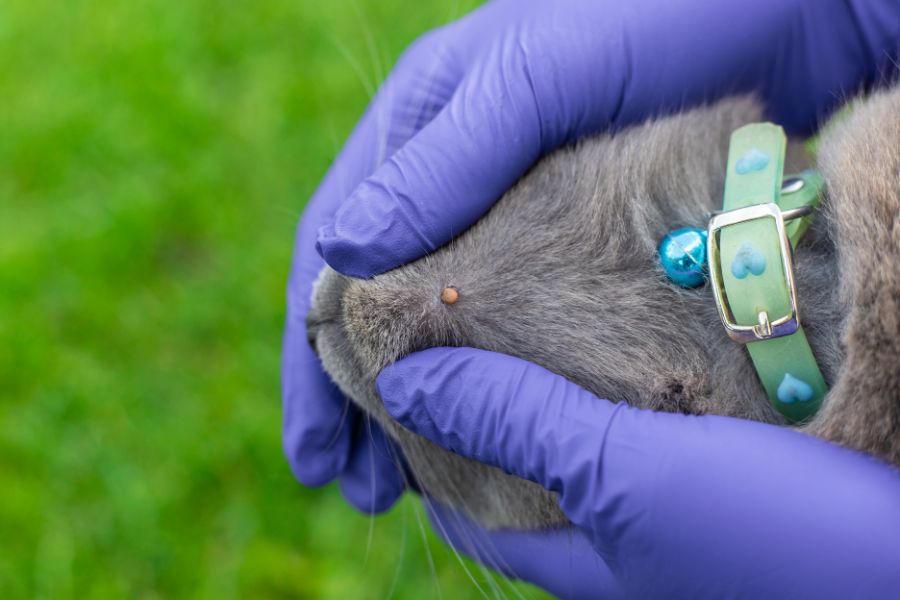
First, it’s important to know how to identify a tick. Ticks are small, spider-like parasites with eight legs that attach themselves to animals to feed on blood. Before feeding, they may be as tiny as a sesame or poppy seed, making them difficult to spot; however, after feeding, they swell and expand to resemble a small grey or brown bean attached to the skin.
Ticks usually attach to areas around the ears, neck, face, under the collar, between the toes, around the eyes, under the tail, and in the armpit or groin area. Running your hands over your pet after spending time outdoors is one of the best ways to detect and remove them early.
What To Do If You Find a Tick?
If you find a tick on your dog or cat, stay calm. The sooner the tick is removed, the lower the chance of disease transmission. To remove a tick, use fine-tipped tweezers or a tick removal tool, and grasp the tick as close to the skin as possible, then pull upward with steady, even pressure. It’s essential that you avoid twisting or squeezing the tick, as this can leave mouthparts behind and beneath the skin or can increase the risk of infection. Once removed, be sure to clean the bite area and wash your hands thoroughly. If possible, save the tick in a sealed container or plastic bag with the date and location where it was found. Your veterinarian may recommend identifying the species if your pet later develops symptoms.
Tick-Borne Diseases and Lyme Disease
Ticks can carry several diseases that affect dogs and, less commonly, cats. One of the most well-known is Lyme disease, which is transmitted through the bite of infected black-legged ticks. Many infected dogs never show signs of illness, but those that do may develop fever, lethargy, loss of appetite, swollen lymph nodes, painful joints, and shifting lameness that seems to alternate between limbs. In severe cases, Lyme disease can affect the kidneys and become life-threatening.
Other tick-borne illnesses include Anaplasmosis, Ehrlichiosis, and Babesiosis, which can cause symptoms such as fever, weakness, bruising, bleeding disorders, weight loss, vomiting, enlarged lymph nodes, and decreased energy. Although cats are generally less susceptible to Lyme disease than dogs, they can still contract tick-borne illnesses. If you witness any odd behaviours after a tick bite, take your pet to the vet immediately. Early detection and treatment are always best.
Symptoms to Watch For After a Tick Bite
After removing a tick, monitor your pet closely daily and even for a few weeks after the bite. It’s essential that you contact your veterinarian if you notice any signs of fever, lethargy or unusual tiredness, loss of appetite, limping or joint stiffness, swollen joints, vomiting or diarrhea, difficulty walking, swollen lymph nodes, and/or pale gums or unexplained bruising. Unfortunately, even if the tick was removed successfully, illness can still develop days or weeks after exposure.
Preventing Tick Bites
Prevention is always the best protection against tick-borne disease. Speak with your veterinarian about year-round tick-prevention products, including topical treatments, oral medications, or tick collars appropriate for your pet. After taking any walks or outdoor play, perform a full-body tick check, especially around the ears, neck, belly, and between the toes.
At home, in your own backyard, be sure to keep grass short, remove leaf litter, and avoid walks in heavily wooded or overgrown areas during peak tick season to reduce exposure.
For cats that venture outdoors, regular tick checks and veterinarian-approved parasite prevention are equally important. Please note, do not use dog tick medications on cats, as some ingredients can be highly toxic to felines. Always consult your vet before giving your pets any new medications.
Be Vigilant for Ticks this Season
Finding a tick on your pet can be alarming, but quick action and proper removal can significantly reduce the risk of disease. Knowing what to do if you find a tick on your pet can be life-saving. Regular tick prevention, routine checks after outdoor activities, and knowing the warning signs of tick-borne illness can help keep both dogs and cats safe throughout tick season.
If your pet develops any signs of illness after a tick bite or you are unsure how to remove a tick safely, contact your veterinarian for guidance. Remember, early diagnosis and treatment can make a significant difference in your pet’s life.
For your professional pet-sitting needs this summer, contact ApronStrings Pet Sitting.